
North East Ambulance Service (NEAS) 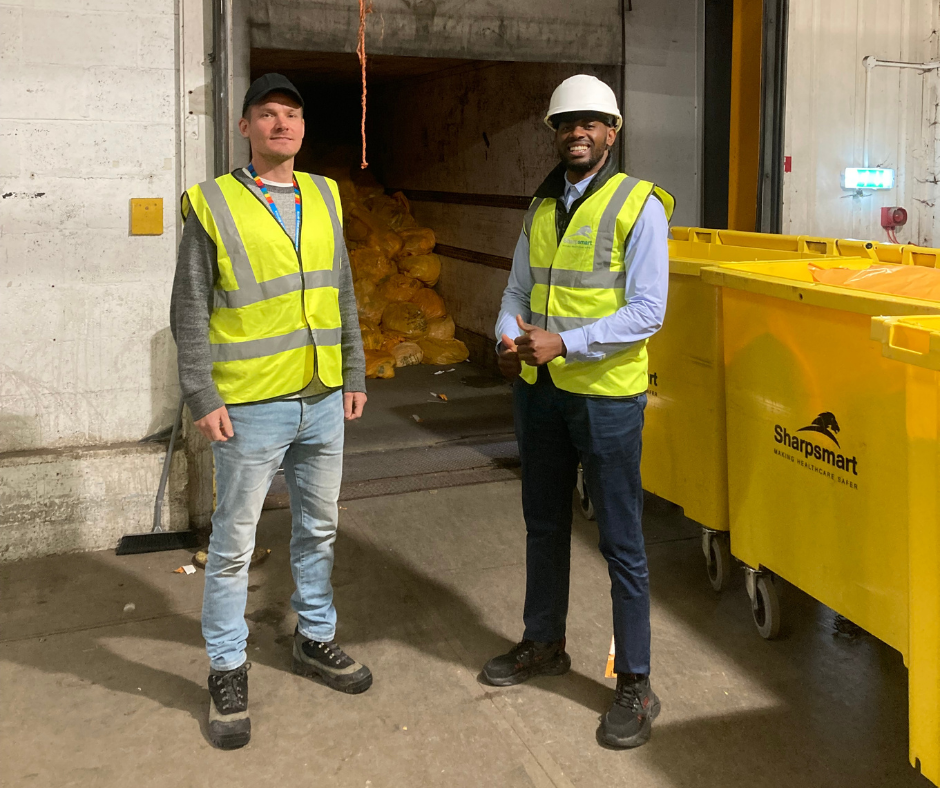 has achieved major reductions in carbon emissions, waste, and costs over the past year - progress that is helping to protect public health as well as the environment.
The Trust has transformed the way it manages healthcare waste through a new waste strategy introduced in late 2024. A full review carried out at the end of 2025 shows the approach is delivering sector‑leading results, with NEAS now outperforming national NHS expectations in several areas.
But beyond financial and operational gains, the driving force behind this work is clear: reducing the environmental impacts that contribute to poor health outcomes across the North East.
What is offensive waste?
Offensive waste is the everyday, non‑infectious healthcare waste produced during routine care. It doesn’t pose a risk of infection, though it may include items such as used non-infectious PPE, dressings, nappies, incontinence pads, non-infectious treatment waste and empty fluid / blood bags. Because it’s classed as non‑hazardous, it can be processed through lower‑impact treatment methods—meaning it’s better for the environment and more cost‑effective for the NHS when separated correctly.
Key achievements so far
Over the past year NEAS has delivered measurable improvements across all waste and sustainability indicators, including:
- 73% reduction in carbon emissions since 2022—well beyond the NHS England 2026 target of 50%.
- 31% fewer waste collections, reducing vehicle movements and associated emissions by almost 500 trips a year.
- 27% reduction in total waste spend, helping public funds go further.
- 17% reduction in overall waste tonnage, showing that more material is being properly segregated and diverted for lower‑impact processing.
- Waste diversion levels now place NEAS in the top 10 Trusts nationally for offensive waste segregation.
Martin Gibson, Environmental Sustainability and Facilities Manager at NEAS, said: “These results reflect the commitment of our teams and partners to improving environmental performance while delivering better value for the public.
“Reducing our environmental impact directly supports the health of our communities, and we are proud to be exceeding national targets.”
These improvements have been driven by better waste training for staff, updated policies, improved segregation guidance, more efficient collection schedules, and ongoing site‑level audits to maintain high standards.
Behind the figures is a cultural shift across the organisation, with estates, operations, clinical teams, and NEAS’s waste contractor all playing a part in reducing the service’s environmental footprint.
Supporting a healthier, greener region
Air pollution, carbon emissions, and waste related environmental impacts are recognised by the NHS as major public health risks.
The Trust waste strategy is helping the organisation play its part in the NHS’s goal to reach net zero carbon emissions. By reducing waste and pollution, the ambulance service is contributing to cleaner air, healthier local environments, and safer conditions for patients and staff.
Martin added: “This review confirms that the offensive waste strategy is delivering exactly as designed: lower carbon impact, reduced costs, fewer collections, and improved compliance with national waste targets.
“We will continue to build on this progress as part of our wider sustainability and operational efficiency programmes.”
The Trust will continue to expand its sustainability work, recognising that the health of the population is closely linked to the health of the environment.
Read more about how NEAS is driving towards a more greener and sustainable Trust here: https://