
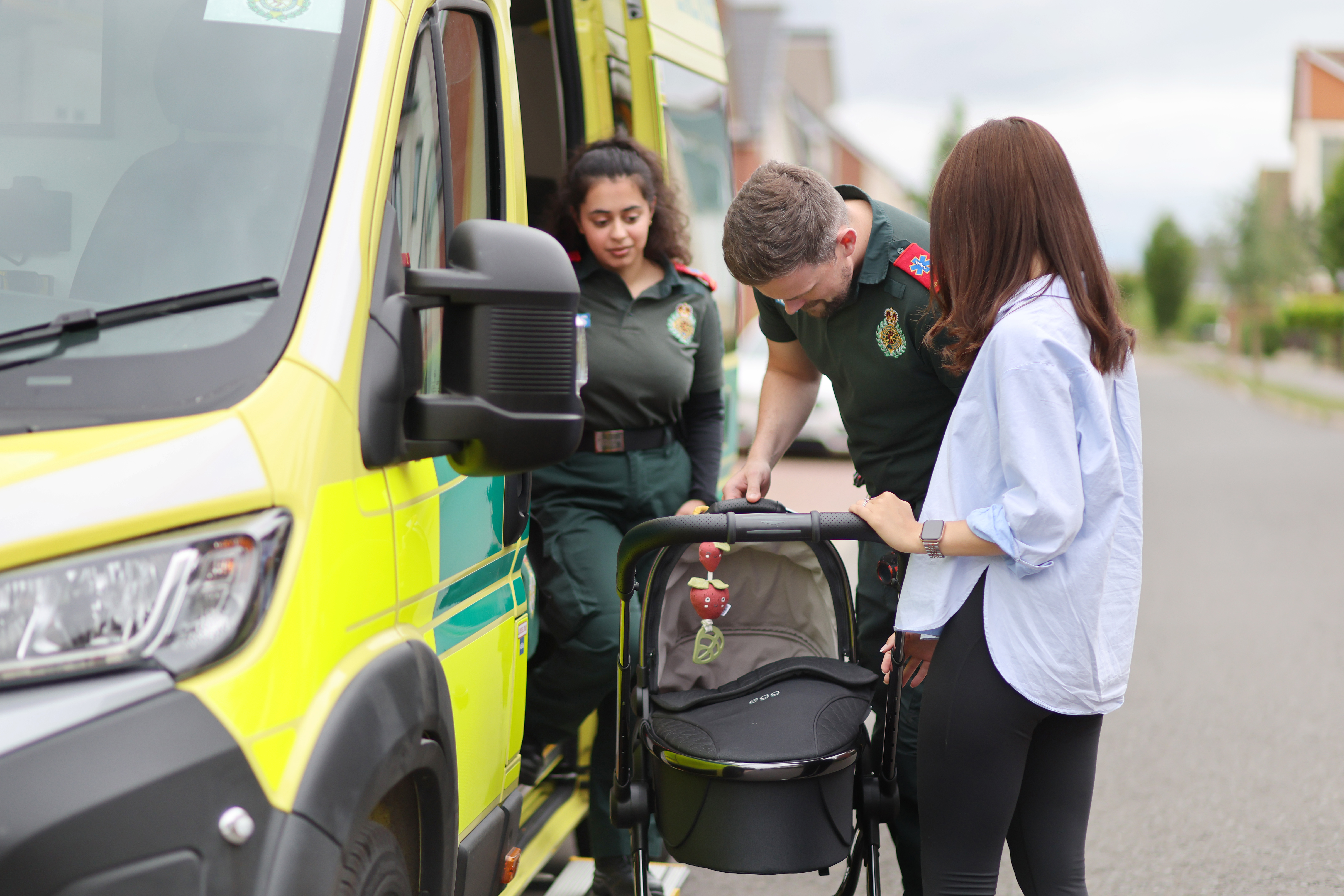
Planning to have your baby at home? You might have questions about what happens if you need emergency help during labour or after your baby is born.
While your midwife and maternity team are there to support you throughout your planned home birth, there may be times when you need an ambulance.
This page explains what you can do to prepare, when to call 999, and what you can expect if our ambulance crews are called to you.
If you are experiencing a medical emergency, call 999.
Getting ready for your home birth
A little preparation can make things easier if you need urgent help.
Before your baby arrives:
- Make sure you and your birth partner know how to contact your midwife
- Make sure everyone involved knows your full address and postcode
- Consider downloading the what3words app and make a note of the three words for your location
- Make sure your house number or name is clearly visible
- Keep the route into and out of your home clear
- If you have poor mobile phone signal, think about how you will make an emergency call, such as using Wi-Fi calling
- Have a small overnight bag ready in case you need to travel to hospital
- Make a plan for anyone else who may need looking after, such as older children or pets
- If you have particular cultural, religious, communication, or accessibility needs, talk to your midwife about these in advance
- Keep your maternity notes and any regular medicines somewhere easy to find
Your midwife can also help you think through what you might need if you require emergency care.
When should I call an ambulance?
An ambulance cannot be booked in advance to be on standby for your home birth. Our ambulance crews are here for emergencies and cannot wait outside your home or a birth centre in case they are needed.
If your midwife needs an ambulance crew to attend you, they will arrange this.
If you need emergency help before your midwife arrives, call 999. Do not call 111 if you need an ambulance for an emergency.
When you call 999, tell the health advisor that you are pregnant or have recently given birth and explain what is happening. Let them know how many weeks pregnant you are, if you are still pregnant, and tell them about any relevant medical conditions or problems during your pregnancy.
You will be asked for your address and other information so that help can be sent to you. The questions asked by the call handler do not delay the ambulance being sent. Put your phone on loudspeaker if you can and follow the instructions you are given.
What information will I need to give?
The 999 health advisor may ask:
- What has happened?
- Are you or your baby breathing normally?
- How many weeks pregnant are you?
- Do you have any medical conditions?
- Have there been any problems during this pregnancy or previous births?
- What is your address and postcode?
- Are there any access instructions, such as a gate code?
- What are the three words for your location if you use what3words?
If your situation changes or the call becomes disconnected, call 999 again. You can also ask for an interpreter if you need one.
How quickly will an ambulance arrive?
We understand that waiting for an ambulance during labour can feel frightening, particularly when you're expecting your baby at home.
Ambulance response times cannot be predicted in advance. They depend on a number of factors, including how busy the ambulance service is, what other emergencies are happening, and where you are located.
National ambulance response standards include:
- Category 1 – immediately life-threatening emergencies
We aim to arrive within 15 minutes in at least 90% of these calls.
For example, this could include a baby who is not breathing.
- Category 2 – other potentially life-threatening emergencies
We aim to arrive within 40 minutes in at least 90% of these calls.
For example, this could include a situation where you need urgent additional pain relief.
These are national targets, not guarantees. An ambulance may arrive sooner or later depending on what is happening across the region at the time.
Sometimes a paramedic or doctor may arrive in a response car before an ambulance arrives, so they can begin helping you as quickly as possible.
What happens when the ambulance crew arrives?
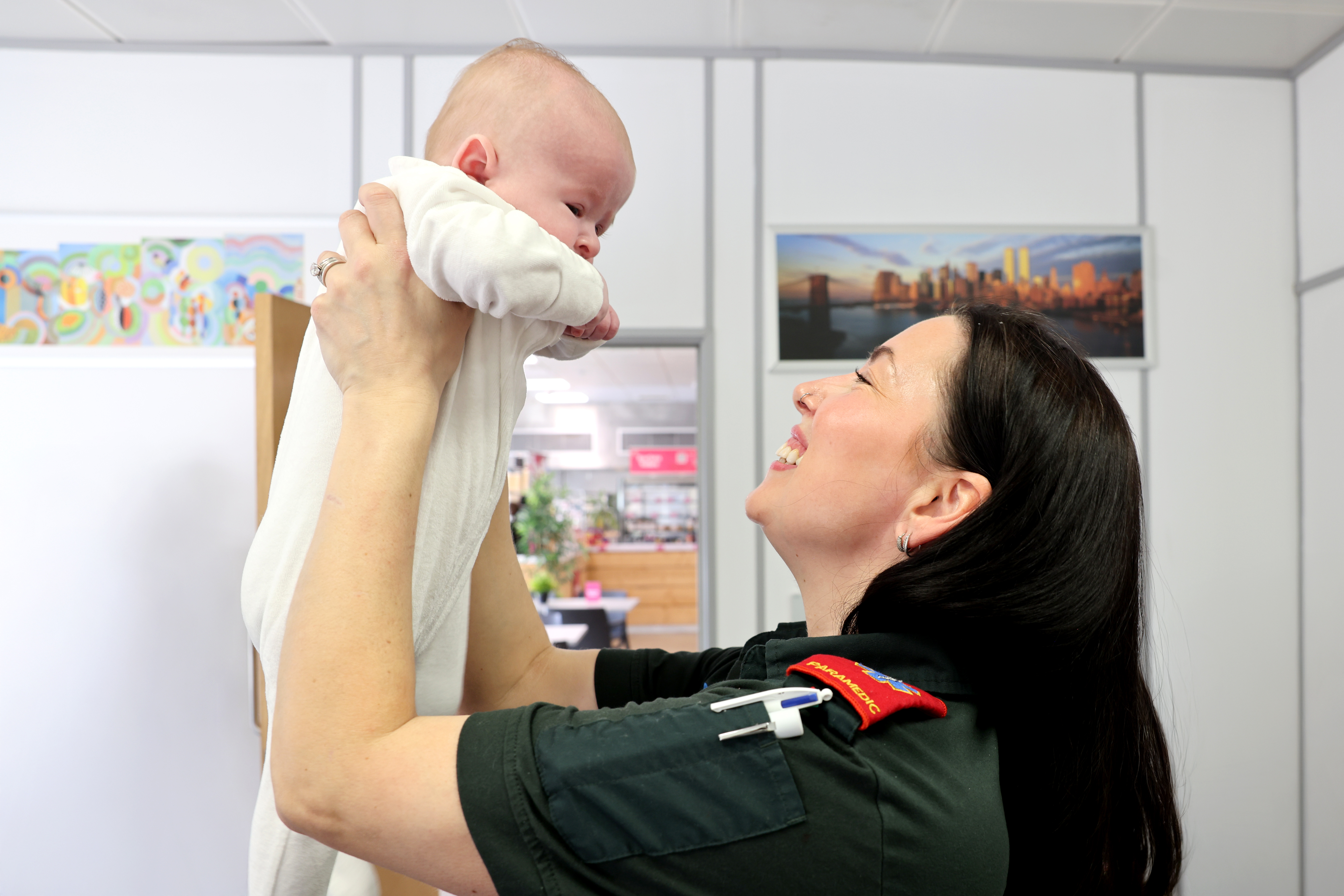
Our ambulance crews are trained to provide emergency care to you and your baby. They will assess what is happening and work alongside your midwife where appropriate.
You may see more than one ambulance vehicle arrive. This is because different clinicians and vehicles may be needed to make sure both you and your baby receive the right care.
Please tell the crew about any important cultural or religious needs you have. You may be cared for by male and/or female ambulance clinicians. If you have your maternity notes and medicines available, give these to the crew.
Ambulance clinicians and midwives have different roles. Our ambulance clinicians have different training and equipment to your midwife. For example, ambulance clinicians cannot carry out all of the checks that a midwife can, including checking your baby's heartbeat or carrying out internal examinations.
Ambulance clinicians are also not trained to provide care for a water birth. If your midwife is not present and you need emergency ambulance care, you may be asked to leave a birthing pool or bath so that you can be assessed and treated safely.
What if my midwife isn't there?
If you are in labour and your midwife cannot attend, or your baby has been born and a midwife cannot attend, ambulance clinicians may recommend that you go to hospital.
This is because ambulance clinicians cannot provide all of the routine checks recommended for you and your baby following birth. If there are concerns about you or your baby, the crew will talk to you about what they recommend and explain the options available.
Where possible, your wishes will be taken into account alongside your medical needs and the safety of you and your baby.
What happens if I need to go to hospital?
If you need to be transferred to hospital, our crews will do everything they can to keep you and your baby comfortable and safe. If it is an emergency, the ambulance may travel using blue lights and sirens.
Everyone travelling in an ambulance must wear a seatbelt, including the person on the stretcher. Your baby will also need to be secured safely for the journey. Ambulance clinicians will advise you about the safest way for your baby to travel. Usually, babies travel in a special harness provided by the ambulance service.
For safety, your baby cannot normally be held skin-to-skin during the ambulance journey. Your baby's cord will need to be clamped and cut before travelling.
It is possible that you and your baby may need to travel in separate ambulances because ambulance crews can only safely monitor one patient in each ambulance. Our crews and your midwife will work to make sure you are reunited as soon as possible.
A partner or support person can usually travel with you and/or your baby, although sometimes they may need to make their own way to hospital.
Which hospital will I go to?
If you need to go to hospital, you will usually be taken to the closest hospital with maternity services. This may not be the hospital where you originally planned to give birth.
If you or your baby later need specialist care at another hospital, this will be discussed with you and arrangements will be made.

Remember: we're here when you need us
Having an emergency during a planned home birth can feel overwhelming. Knowing what to expect can help you feel a little more prepared. Your midwife and maternity team should be your first point of contact for your planned maternity care. But if you or your baby are experiencing an emergency, call 999.
Our ambulance control room teams and crews are trained to support you in an emergency and will work to provide safe, compassionate care for you and your baby.
Before your baby arrives, remember:
- Know your numbers
Make sure you know how to contact your midwife. - Know your location
Have your postcode and what3words location ready. - Know your route
Keep entrances and exits clear and make sure your property is easy to identify. - Know your plan
Think about who will look after other children or pets if you need to go to hospital. - Know when to call 999
If you need emergency help, call 999. Don't worry about whether you're "wasting our time" - if you think you or your baby are seriously unwell, we want you to get help.
Please remember: ambulance crews cannot be booked in advance for a planned home birth and cannot wait nearby in case they are needed.