For health lecturer Karen Pyle, 53, knowing CPR isn’t just a lesson for her students; it saved her life. Earlier this year, her colleague and friend Jessica Beni put her training into practice when Karen suddenly collapsed and went into cardiac arrest at work. Now, Karen is sharing her story with students learning the very skills that helped save her life, in the hope that they will one day be ready to do the same for someone else.
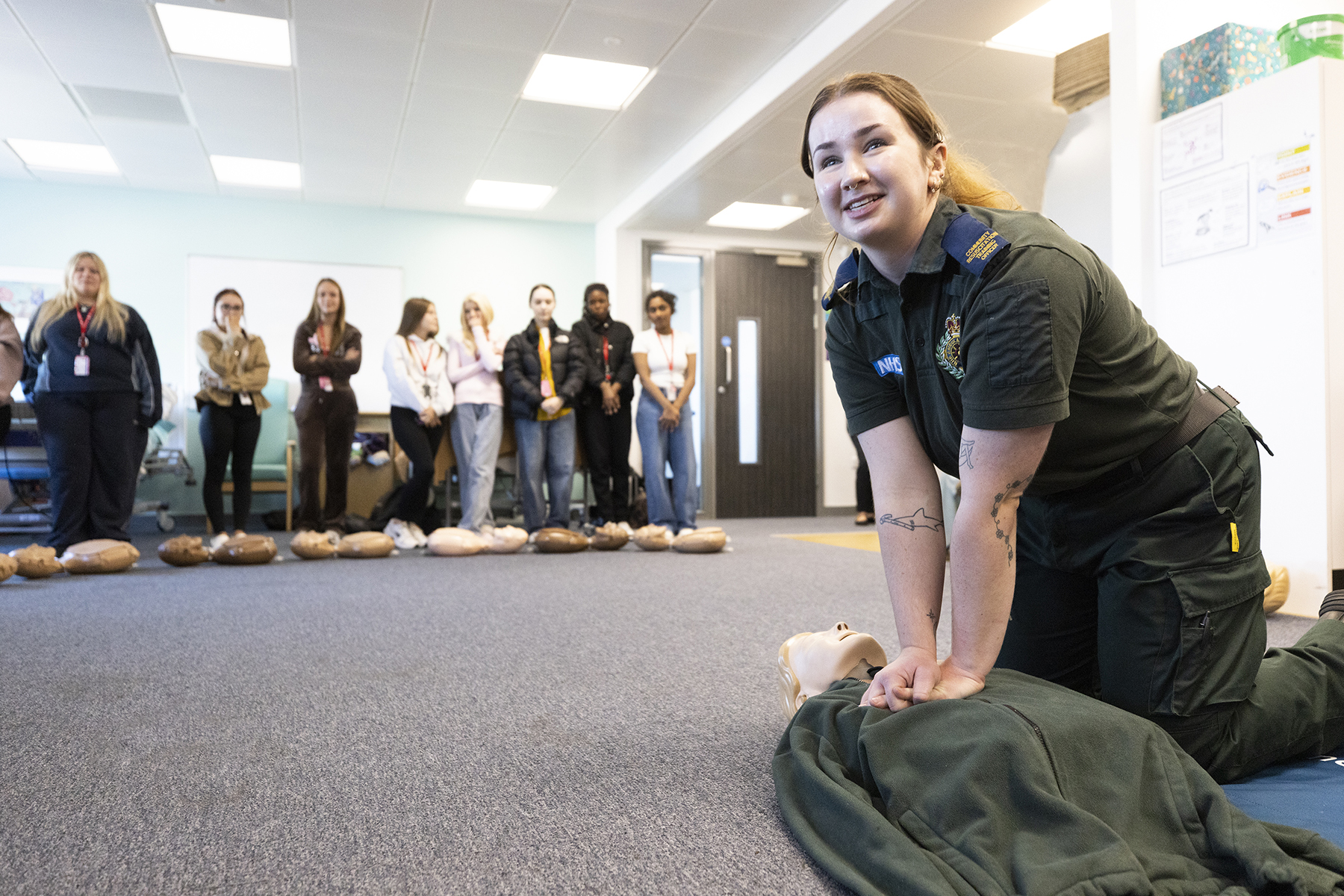
Restart a Heart Day, on Friday 16 October, encourages people to learn CPR and how to use a defibrillator, helping give someone experiencing a cardiac arrest the best possible chance of survival before an ambulance arrives. In the lead-up to the day, NEAS colleagues have also been equipping young people with the skills and confidence to successfully deliver CPR by hosting lifesaving training at:
- Argyle House School, Sunderland
- Ponteland High School, Ponteland
- Darlington College, Darlington
- Redcar and Cleveland College, Redcar
- Bede Sixth Form College, Billingham
- Stockton Riverside College, Stockton-on-Tees
- William Leech Primary School, Lynemouth
- Whittingham Scouts and Senior Scouts, Whittingham
- Newcastle College (Rye Hill Campus), Newcastle upon Tyne
- Bellingham Middle School, Bellingham
- Newcastle Drayton School, Newcastle upon Tyne
By the end of October, the service’s volunteer development team and volunteer community first responders will have delivered training sessions to 1,475 children in years 5 through 12 across the region.
In 2025/26, North East Ambulance Service crews attended over 6,200 cardiac arrests across the region, with health advisors supporting thousands of callers to perform CPR over the phone and dispatching the use of more than 4,600 community defibrillators.
Paul Brolly, community resuscitation officer at NEAS, said: “When someone suffers a cardiac arrest, every second counts. Knowing what to do in those first few minutes can make the difference between life and death, which is why it is so important that people of all ages have the confidence to act. If someone collapses and is not breathing normally, call 999 immediately. Our health advisors will talk you through performing CPR while our crews are on their way, and a defibrillator can help give that person the best possible chance of survival.
“You do not need to be a healthcare professional to save a life. You could be a student, a colleague, a friend or a complete stranger. What matters is being ready to act when someone needs you.”
On 25 March, Karen was at work at Newcastle College, meeting with Jessica and a student. Everything seemed normal until Karen suddenly tilted her head and her breathing changed.
Jessica, 39, an assistant head of curriculum, quickly realised something was wrong. When Karen did not respond to her name, she asked the student to leave the room and tried to wake her. Initially unsure whether Karen was having a stroke or another medical emergency, Jessica called for help. A colleague contacted 999 while Jessica stayed with Karen, and another colleague went to get a defibrillator.
As Karen’s condition deteriorated, Jessica laid her on the floor and began chest compressions, drawing on her CPR training while her colleague encouraged her to keep going. It was an experience unlike anything she had expected. Jessica could feel Karen’s ribs breaking beneath her hands and remembers tears rolling down her face as she continued the compressions, determined to do everything she could until the ambulance crew arrived.
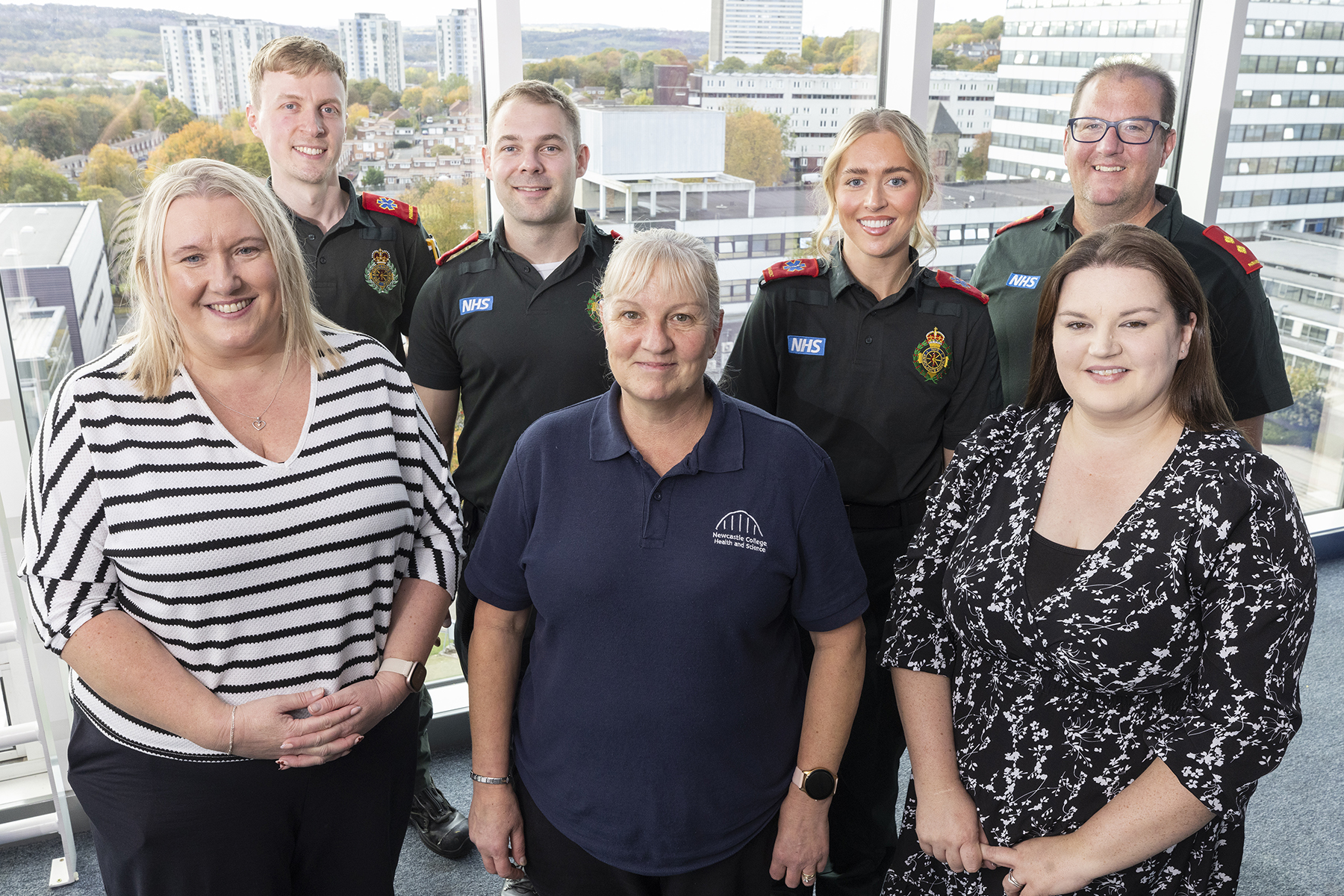
As Jessica continued CPR, NEAS colleagues worked together to coordinate the emergency response and provide Karen with lifesaving care. Health advisor Alison Ainsley talked Jessica through CPR, while communications officer Elliot Kalthoeber coordinated the dispatch of ambulance resources. Arriving on scene shortly after the call was made, paramedics Thomas Hodge, newly qualified paramedics Lucy Richardson and Alastair Woods, specialist paramedic Graeme Cutty, ambulance support practitioners Richard Lishman and Neil (Bobby) Moore, and clinical team leader Andrew Holmes worked to treat Karen and give her the best possible chance of survival.
Karen was rushed to the Royal Victoria Infirmary before being transferred to the Freeman Hospital, where she spent a week receiving treatment and had a stent fitted. Her recovery was challenging. Alongside broken ribs sustained during CPR, she experienced low blood pressure, dizziness, breathlessness and fatigue. Her husband took a month off work to care for her, and she received support from a cardiac nurse before beginning cardiac rehabilitation.
After around two and a half months, Karen returned to work so she could see her students before they left. Now, she is reuniting with the NEAS team who helped care for her during those crucial first moments, sharing her experience with students learning how they could one day save a life themselves.
Karen said: “It was an ordinary day going to work feeling fine, and this could happen to anyone at any time. I was lucky to be in the right place at the right time because if it had been a bit earlier, I could have been travelling to work or alone at home. I wanted the story told because this can happen to anyone and I am here to tell the story.
“It is scary to think about doing CPR and I don't think you will ever be prepared for what happens. But being somewhere when it happens and not knowing what to do is scary too. The more people trained, the more lives that can be saved. You hope you never have to use it, but if the moment comes, you could save the life of a friend, family member, teacher, colleague or even a stranger.”
For Jessica, the experience has reinforced just how important it is for people to learn CPR, even if they never expect to need it. She said: “When Karen collapsed, my training kicked in, but nothing quite prepares you for performing CPR on a colleague who is also a friend. It was emotional and frightening, but I knew I had to keep going. I could hear the 999 call handler encouraging us to continue, and I focused on doing everything I could until the ambulance crew arrived.
“Even if you have never performed CPR before, please don’t be afraid to try. If you’re unsure what to do, call 999 and listen to the instructions you’re given. You could make the difference between life and death.”
Andrew Parsons, head of curriculum for health and science at Newcastle College, said: “Karen's cardiac arrest at work in March brought home how suddenly this can happen. Jess knew CPR and acted swiftly. We are very grateful for what she did. Without her knowledge and actions, things could have turned out very differently for Karen. Hosting Restart a Heart Day felt especially meaningful for our team because we have seen first-hand the difference these skills can make.”
NEAS continues to improve cardiac arrest survival through research, clinical improvement and community training. This includes the SPIDERMAN trial, which investigates the use of an adrenaline infusion pump following the return of a patient's heartbeat, alongside work using data from ambulance defibrillators to improve cardiac arrest care. The Trust also supports community resilience initiatives backed by £142,000 from NHS Charities Together.
Karen’s story is one of many told by the service over the past year. Charlotte, a 48-year-old midwife from Ingleby Barwick, survived a cardiac arrest at home after her husband Phil called 999 and received guidance from a NEAS health advisor. Peter Routledge, 72, from Bedlington, survived after members of the public called 999, a nearby worker started CPR and used a defibrillator, and a NEAS health advisor provided support over the phone. After Gary Callum survived a heart attack and subsequent cardiac arrest, his son Ryan raised more than £500 for the North East Ambulance Charity and British Heart Foundation by taking part in the Geordieman half-distance Ironman.
Paul continued: “Every one of these stories begins with someone taking action. That person might be a colleague, a friend, a family member or a stranger. They may not be wearing a green uniform, but what they do in those first few minutes can make all the difference.
“Knowing CPR means you can give someone a chance while our crews are on their way. You could be the person who helps someone survive and return home to the people they love. The first person to respond to a cardiac arrest may not be wearing a green uniform. It may be you.”
The British Heart Foundation’s free RevivR tool allows people to learn CPR in around 15 minutes. Find out how to learn CPR: Learn CPR in 15 minutes