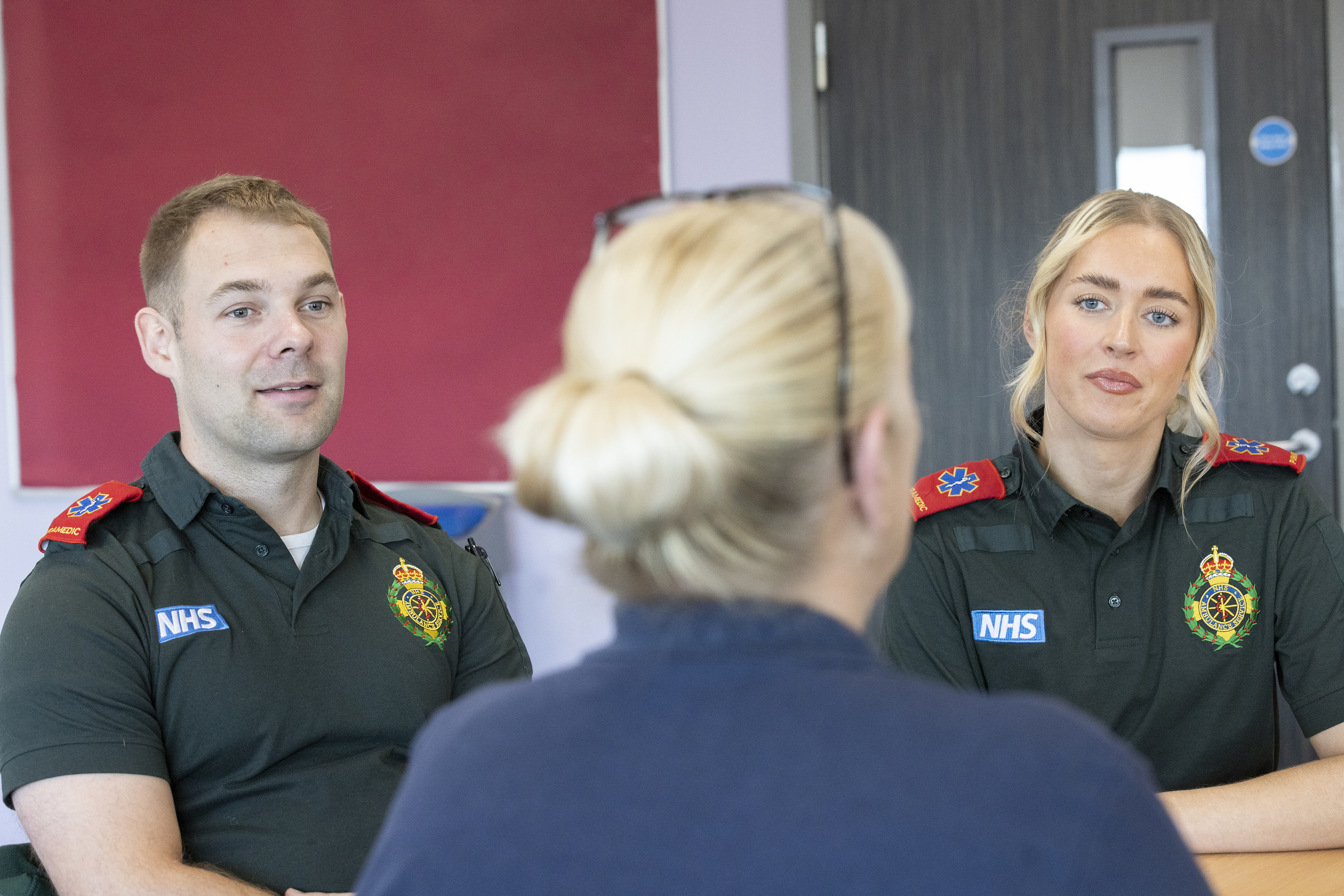
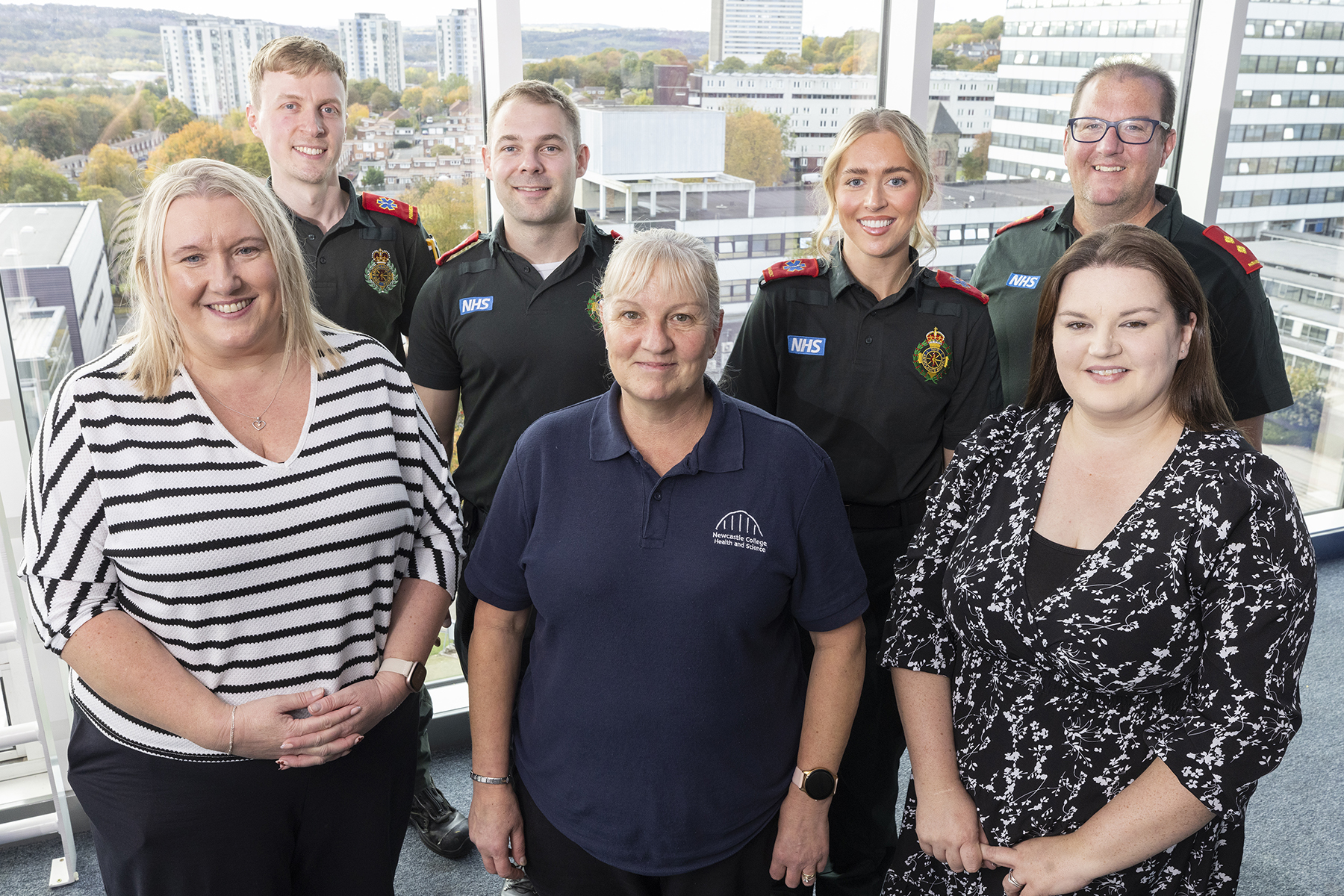
Karen Pyle, 53, collapsed at work at Newcastle College on 25 March, when her colleague and friend Jessica Beni immediately put her CPR training into practice, performing chest compressions while colleagues called 999 and fetched a defibrillator. Now recovered enough to return to work, Karen met the ambulance team who treated her during those critical first moments, sharing her experience in the hope that more people would feel confident to act if someone suffered a cardiac arrest.
The reunion took place as NEAS marked Restart a Heart Day on Friday 16 October, with colleagues also delivering CPR awareness sessions to more than 200 students at Newcastle College.
For paramedics Lucy Richardson, Alastair Woods, Thomas Hodge, and Andrew Holmes, seeing Karen again offered a rare opportunity to discover what happened to someone they had treated during a life-threatening emergency. Once patients leave the ambulance service's care, crews do not always know the outcome of their treatment, making reunions like this particularly meaningful.
On meeting Karen again, Alastair said: “It's really emotional to see Karen again and hear how well she's doing after everything she went through. When we attend a cardiac arrest, we're completely focused on giving that person the best possible chance of survival, but once they leave our care, we don't always get to find out what happens next. Reunions like this are incredibly rare, so to see Karen back at work and sharing her story is really special.”
Lucy agreed, sharing: “To come back months later and meet Karen again, knowing what she's been through and seeing her doing so well, is incredibly moving. In those first few minutes, everyone involved is working towards the same goal of giving someone a chance of survival. We don't often get to see the outcome, so being able to reunite with Karen and hear her story is a real privilege.”
On 25 March, Karen suddenly collapsed and went into cardiac arrest while at work at Newcastle College. Her colleague and friend Jessica Beni immediately began CPR while colleagues called 999 and fetched a defibrillator. NEAS health advisor Alison Ainsley talked Jessica through chest compressions over the phone while ambulance crews, coordinated by communications officer Elliot Kalthoeber, rushed to the scene to provide lifesaving treatment.
Karen was taken to hospital, where she spent a week receiving treatment and had a stent fitted. After a challenging recovery involving broken ribs, dizziness, breathlessness and fatigue, she began cardiac rehabilitation and returned to work around two and a half months later. Read Karen's full story: https://
She said: “It was an ordinary day going to work feeling fine, and this could happen to anyone at any time. I was lucky to be in the right place at the right time because if it had been a bit earlier, I could have been travelling to work or alone at home. I wanted the story told because this can happen to anyone and I am here to tell the story.
“It is scary to think about doing CPR and I don't think you will ever be prepared for what happens. But being somewhere when it happens and not knowing what to do is scary too. The more people trained, the more lives that can be saved. You hope you never have to use it, but if the moment comes, you could save the life of a friend, family member, teacher, colleague or even a stranger.
“I am really glad to have been able to meet the paramedics who helped save my life that day and tell them how thankful I was for what they did. They were all incredible, and being here and well enough to tell them this is something I don’t take for granted.”
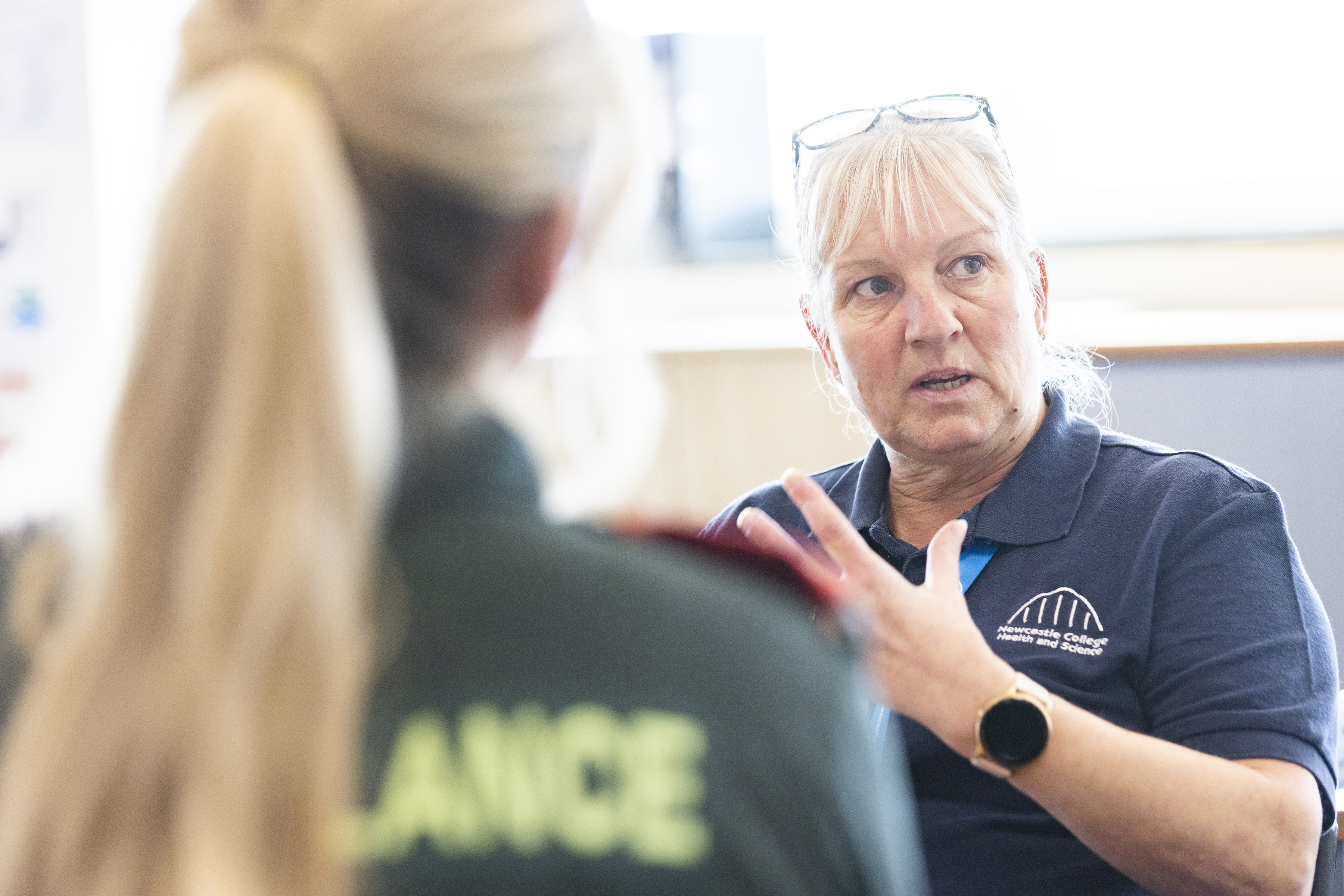
For Jessica, the experience has reinforced just how important it is for people to learn CPR, even if they never expect to need it. She said: “When Karen collapsed, my training kicked in, but nothing quite prepares you for performing CPR on a colleague who is also a friend. It was emotional and frightening, but I knew I had to keep going. I could hear the 999 call handler encouraging us to continue, and I focused on doing everything I could until the ambulance crew arrived.
“Even if you have never performed CPR before, please don’t be afraid to try. If you’re unsure what to do, call 999 and listen to the instructions you’re given. You could make the difference between life and death.”
Karen's experience also highlights the importance of ensuring everyone has the best possible chance of receiving lifesaving treatment, regardless of their gender identity and sex. New NHS data shows that one in three people feel hesitant or uncomfortable about performing CPR on women, while women are 27% less likely to receive CPR than men. This can have a serious impact when a woman suffers a cardiac arrest. Immediate CPR can help maintain blood flow to the brain and other vital organs until emergency help arrives, and hesitation can cost valuable time.
Alastair continued: “Women have historically - and in many cases still do - faced inequalities in healthcare, with symptoms sometimes being overlooked or their experiences not always being taken as seriously as they should be. Sadly, we also see inequalities in emergency situations, with women around 27% less likely to receive CPR from a bystander than men.
“There are lots of reasons why people might hesitate, whether that's feeling uncomfortable about touching a woman's chest, worrying about removing her bra to use a defibrillator, or being concerned about how their actions might be perceived. But when someone suffers a cardiac arrest, those few moments can make the difference between life and death, and nobody should be disadvantaged because of their gender.
“That's why it's so important to share stories like Karen's: to challenge misconceptions, break down the stigma around performing CPR on women, and help give every woman who suffers a cardiac arrest the best possible chance of survival.”
In 2025/26, NEAS crews attended more than 6,200 cardiac arrests across the region. Health advisors supported callers to perform CPR over the phone and coordinated access to more than 4,600 community defibrillators.
Paul Brolly, community resuscitation officer at NEAS, said: “When someone suffers a cardiac arrest, every second counts. Knowing what to do in those first few minutes can make the difference between life and death, which is why it is so important that people of all ages have the confidence to act. If someone collapses and is not breathing normally, call 999 immediately. Our health advisors will talk you through performing CPR while our crews are on their way, and a defibrillator can help give that person the best possible chance of survival.
“You do not need to be a healthcare professional to save a life. You could be a student, a colleague, a friend or a complete stranger. What matters is being ready to act when someone needs you.”
As well as responding to emergencies, NEAS continues to improve cardiac arrest survival through research, clinical improvement and community training. This includes the SPIDERMAN trial, which investigates the use of an adrenaline infusion pump following the return of a patient's heartbeat, alongside work using data from ambulance defibrillators to improve cardiac arrest care. The Trust also supports community resilience initiatives backed by £142,000 from NHS Charities Together.