
Emergency responders, healthcare professionals and specialist clinicians from across the UK came together in Gateshead on Tuesday 3 November for a conference focused on improving care for patients during major incidents and medical emergencies.
The North East Specialist Capabilities Conference (NESCC) 2026, hosted by North East Ambulance Service (NEAS), brought together colleagues from ambulance services, hospitals, emergency services and resilience organisations to share experiences, learn from one another and strengthen partnerships.
The central theme of the day was clear: working together helps save lives. 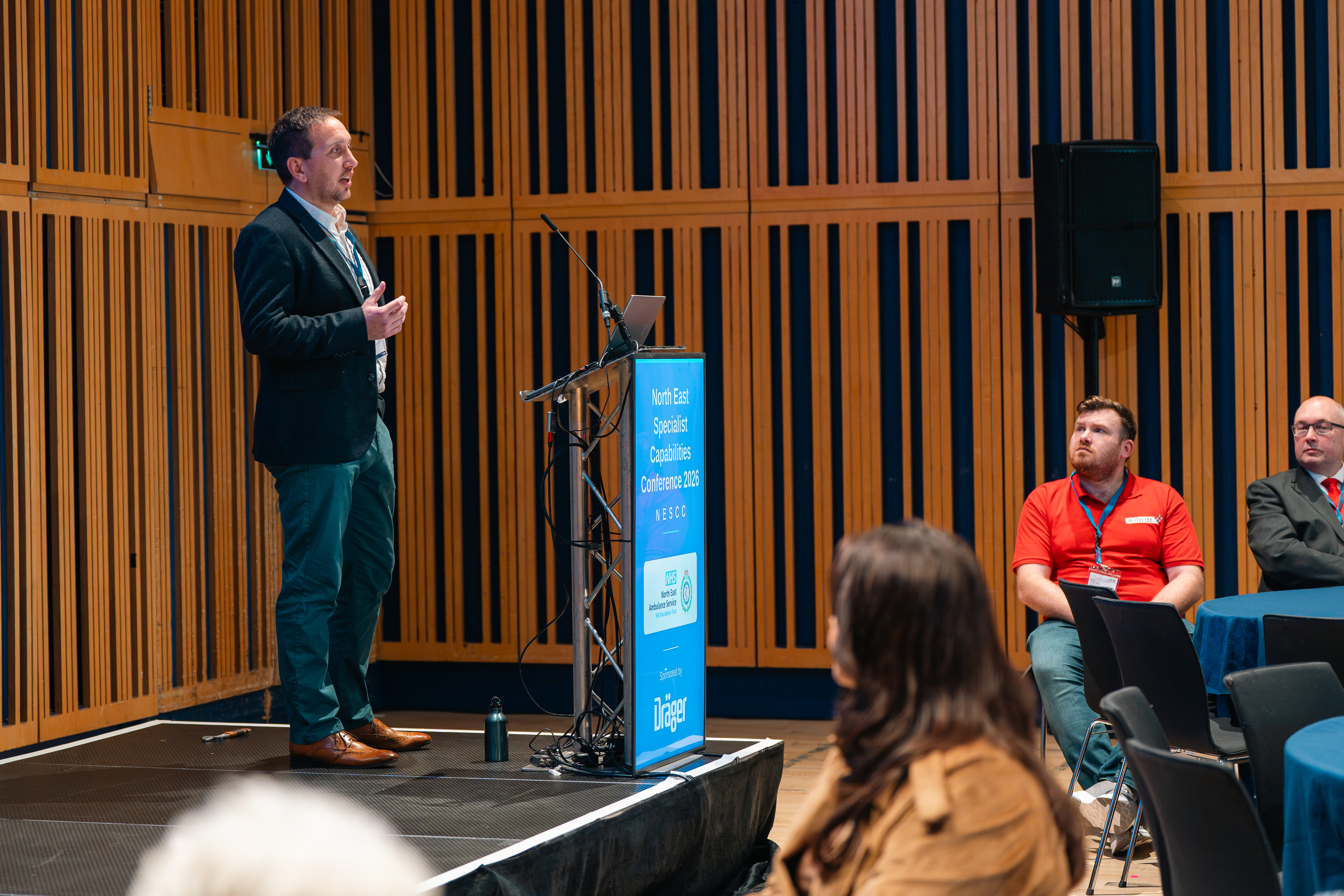
The conference originated from a desire to share lessons from major incident response after organisers heard Adam Desmond, the first paramedic on scene during the London bombings in 2005, speak about his experiences. As planning developed, the event grew into a celebration of the collaboration that takes place every day behind the scenes to support patients and communities.
Opening the event, Mark Sewell discussed the increasingly complex challenges facing ambulance services and the importance of investing in specialist skills and capabilities.
Alun Ross, HART and resilience manager at NEAS, highlighted the work and impact of the Trust's Hazardous Area Response Team (HART).
HART paramedics are specially trained to care for patients in difficult and dangerous environments, including major incidents, complex rescue situations and locations that can be challenging to access. Alun's presentation focused on the difference these specialist clinicians make to patients and communities and the role they play in supporting the wider ambulance service.
Delegates also heard from Lee Thompson, who explored how pre-hospital critical care has transformed across the North East over the last 20 years.
His presentation highlighted how ambulance services, air ambulance charities, specialist doctors, hospitals, trauma centres and other healthcare partners have worked together to create a more joined-up approach to care. This collaboration has helped improve access to specialist treatments and expertise for patients experiencing serious illness and injury.
Chris Smith, a military doctor and specialist in emergency medicine, shared research involving more than 13,000 trauma patients which examined how specialist pre-hospital care can improve survival and recovery following serious injury.
He also spoke about the importance of different services and specialist teams working together, including air ambulance crews, HART teams, frontline ambulance staff and critical care practitioners, to ensure patients receive the right care as quickly as possible.
Keynote speaker Adam Desmond shared his personal experiences from the London bombings and spoke openly about the realities of responding to major incidents. He discussed teamwork, communication, decision-making and the lessons emergency responders can learn from some of the most challenging situations they may ever face.
Kevin Scollay, chief executive of North East Ambulance Service, said:
"The conference highlighted how much can be achieved when healthcare organisations, emergency services and specialist teams work together.
"The knowledge, experience and research shared throughout the day will help us continue improving services, strengthening our capabilities and ensuring patients receive expert care whenever they need it.
"I am incredibly proud of the collaboration that exists across our region and of the people who work every day to keep our communities safe."
The conference highlighted the many specialist teams and partnerships that support emergency care across the North East and the ongoing work taking place to ensure patients receive the best possible care, whatever the circumstances.