
People who have used North East Ambulance Service (NEAS) are playing a direct role in shaping future NHS services through a new patient experience panel.
The panel brings together patients, carers and members of the public from a wide variety of backgrounds and experiences to work alongside staff and senior leaders to help improve services across the region.
Members will help influence everything from patient information and communications to service developments, policies and future improvements, ensuring the experiences of patients remain at the heart of decision-making.
The Trust has recruited people from across the North East, including carers, retired NHS staff, disability advocates, patient representatives, people with lived experience of long-term health conditions, and those supporting family members with complex medical needs.
Andrew Pike, quality and patient experience manager at NEAS, said: "Every patient experience tells us something valuable. Whether someone has received emergency care, used NHS 111 or supported a loved one through illness or injury, their insight helps us understand what matters most to the people we serve.
"The creation of our patient experience panel is an important step in ensuring those voices are heard and acted upon. We are committed to working closely with members to identify opportunities for improvement and help shape the future of our services."
Among those joining the panel is Newcastle resident Jean Steel, who has supported several elderly relatives and friends while they accessed ambulance services in rural parts of the North East.
Jean said: "I've seen the ambulance service from both the patient and family perspective over a number of years. I wanted to use those experiences constructively to help improve care for future patients and families.
"Success for me would be knowing that the experiences shared by patients genuinely influence positive change and help improve communication and support for people when they need it most."
Another member, Darlington resident Abbi Woodley, whose daughter has complex medical needs, believes the panel can help improve services for some of the region's most vulnerable patients.
She said: "Families facing medical emergencies often rely on ambulance services during some of the most stressful moments of their lives.
"Being part of the panel gives me the opportunity to share our experiences and help shape services so that people can have confidence they'll receive the care and support they need when it matters most."
The panel also includes representatives with experience in cancer care, disability advocacy, mental health services, learning disability support, patient engagement and community wellbeing.
Members will meet regularly throughout the year, both online and in person, working collaboratively with staff to ensure patient feedback helps drive service improvement.
The creation of the panel supports NEAS's commitment to involving patients and communities in the design and delivery of healthcare services and ensuring the diverse communities of the North East are represented in decision-making.
Jean, 62, Newcastle
Background: Retired

Jean joined the panel after years of supporting elderly relatives, friends and family members using ambulance services across Newcastle, County Durham and Cumbria.
She hopes her experiences will help improve communication with patients and families and ensure rural communities are represented in discussions about service development.
She said: “Giving patients and the public a meaningful voice helps bridge the gap between how a service is designed and how it is actually experienced.
“My experiences have given me a real appreciation of the vital role the ambulance service plays, particularly for older people living in rural communities. I would like to use what I have learned to help the Trust understand the impact its services have on patients and their families. I see the panel as an opportunity to turn personal experiences into something positive and constructive that could benefit others."
Alastair Beattie, 67, Newcastle
Background: Retired from the NHS

Alastair hopes to use his experience of working within the NHS, combined with first-hand experience of using the ambulance service, to help improve patient care.
He said: “I think it’s important for patients and members of the public to have a voice in shaping healthcare services because they see things that the designers of the service do not see and designers cannot be expected to understand how different patient groups might need to access the services."
Ganiyat Olatorera Olukemi Kareem, 37, Newcastle
Background: Care assistant

Ganiyat, who is originally from Nigeria, is an AuDHD and hopes to represent the under-represented in our region, using her experience of using the service to help inform improvements.
“Healthcare services are built for people,” she said. “To meet people’s needs, identify pain points and challenges and motivate people to use services, services should be built with them for them to increase accessibility, adoption, assess and improve treatment.”
Jemma, 36, Hexham
Background: service development manager for a learning disability organisation

Having previously worked with NEAS to help the service gain feedback from the people she works with, Jemma was keen to get involved in the patient panel. On a more personal level, she would also like to help improve mental health experiences, care and outcomes after seeing first-hand how a family member has required support.
“Having a voice and having influence for change is something most people don't get to do in their everyday lives,” she said. “Advocating for others is a huge privilege and an opportunity to improve outcomes for our communities and the people in them at a time when they are at their most vulnerable. I personally can't think of something I would find more rewarding and worthwhile than that.
“Having had to use ambulance services in both my professional capacity and in my personal life, I have seen firsthand the challenges patients and practitioners face when trying to access care and treatment for the person they are supporting.
“Success to me as a member of the panel looks like change; changes in perceptions and acknowledging training needs beyond basic life support; acknowledging that the demographics in the country are changing and that services must change with them to offer more inclusive health care for people.”
Joy, 27
Background: Postgraduate student in Childhood and Youth Wellbeing Studies, with an academic and professional interest in education, community wellbeing and people's experiences of care.

Joy believes that meaningful improvements in public services begin with listening to the people they serve, and is particularly interested in how organisations can create systems that are not only efficient but also compassionate, inclusive and responsive to people's individual needs.
“I hope the panel can help strengthen the relationship between NEAS and the communities it serves, ensuring that patient feedback becomes an active part of service development and improvement,” she said.
“Sometimes, a fresh perspective, a different background or simply asking the right questions can highlight things that may otherwise be overlooked.
“I would love to see recommendations from the panel influence policies, communication processes, patient engagement and the overall delivery of services. Ultimately, I would like to look back and identify tangible improvements that came about because people were given the opportunity to speak and were genuinely listened to.”
Denise, 62, Morpeth
Background: Service manager at the Patient Advice and Liaison Service (PALS)

Denise is a firm believer that it is essential for patients to be listened to and have a voice in shaping healthcare services.
“NEAS offers a great service, but improvements can always be made,” she said.
“I hope to be able to share my NHS experience to improve the patient experience of patients that use NEAS services.”
Abbi Woodley, 36, Darlington
Background: Psychological Wellbeing Practitioner and parent carer

Abbi's involvement is shaped by her experiences supporting her daughter, who has Pfeiffer Syndrome and complex medical needs, including hydrocephalus.
Having relied on ambulance services during medical emergencies, she is passionate about improving patient safety and developing pathways that help patients access specialist care more quickly.
“It’s paramount that those who have experience of the North East Ambulance Service have a voice, to be able share their experiences and ultimately improve patient safety,” she said.
Patrick, 77, North Shields
Background: Retired professional, charity volunteer and patient representative
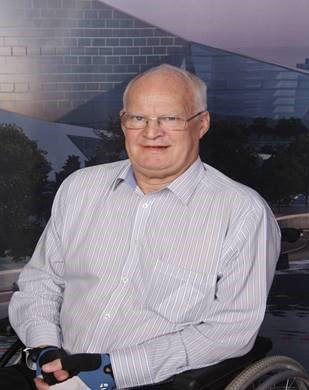
Patrick is an active patient representative who works with Northern Cancer Voices and regularly gathers feedback from cancer patients.
As someone who uses a wheelchair and relies on hospital appointments, he hopes to help identify practical improvements that can improve patient experience, particularly around communication and transport.
“Unfortunately, the patients with the most relevant experience are frequently those least able to participate because of illness, disability or other personal circumstances,” he said.
“Personally, being listened to is not my primary objective. What matters is what happens afterwards. The greatest satisfaction comes not from being consulted, but from helping to make something better.
“I have been particularly impressed by the range of experience represented on this panel. I would like the panel to develop a reputation for making practical recommendations that lead to real improvements.”